Large Landscape Pots for Patios, Gardens, and Entryways
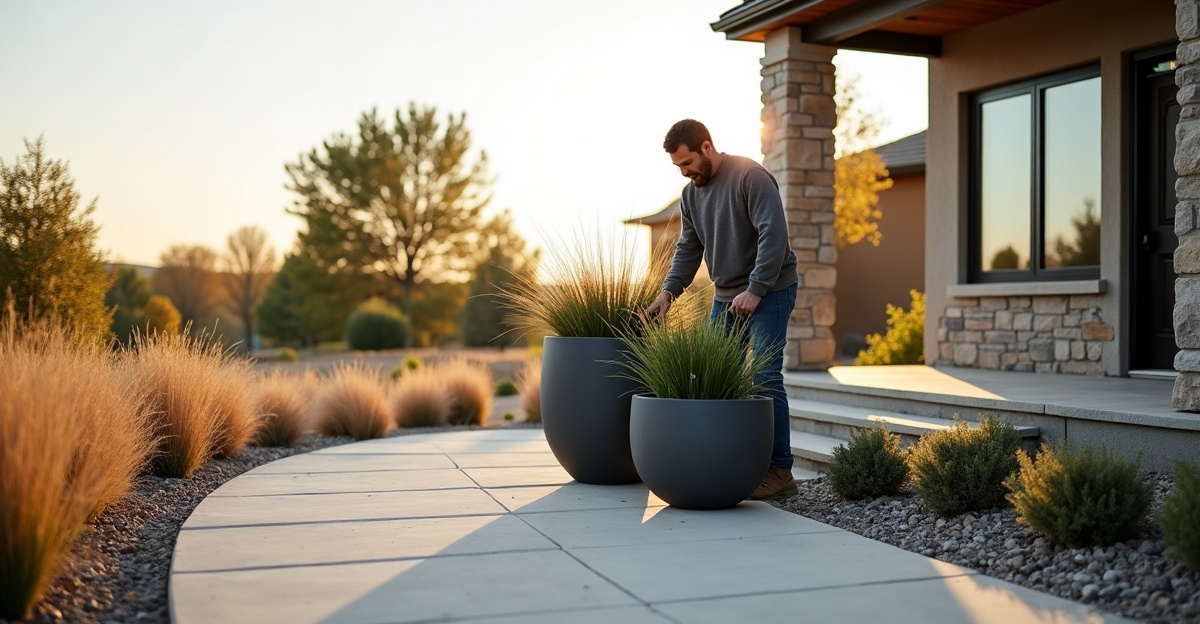
Large landscape pots can shape patios, gardens, and entryways when we match their size, material, placement, drainage, and plants to the property’s layout and conditions. In Idaho Falls, we also plan for sun, wind, irrigation, filled weight, and winter freeze-thaw cycles.
Key Takeaways
- We confirm final placement, access routes, walkway clearance, structural load limits, and filled weight before we install a large planter.
- We compare concrete, ceramic, metal, fiberglass, composite, and resin pots for durability, stability, insulation, appearance, and cold-weather performance.
- We select pots with open drainage holes and use quality container potting mix. We direct runoff away from entries, walkways, patios, and foundations.
- We choose plants with matching sun, water, root-space, and seasonal needs. We account for wind, reflected heat, and limited root insulation.
- We include irrigation changes, cleaning, soil renewal, winter protection or storage, and seasonal plant replacement in the maintenance plan.
Choose the Right Size, Material, and Placement Before Buying
Large landscape pots are containers sized to match their setting, plant growth, and practical handling needs. A planter that looks substantial at a wide office entry may overwhelm a narrow front walk. The right size also leaves room for doors to swing, people to pass, routine maintenance, and safe access to irrigation or lighting.
Before filling any large garden containers, confirm their final location. Soil and water add significant weight, making even lightweight planters difficult to reposition. Check delivery routes, patio or deck load capacity, wind exposure, and whether seasonal care will require moving the container.
Oversized outdoor planters work well at front entries, patios, garden focal points, apartment entrances, restaurants, retail storefronts, medical offices, model homes, office buildings, and development common areas. They should frame the property without blocking sightlines, sidewalks, accessibility routes, drainage paths, or maintenance access. Well-planned landscape design services help connect containers with existing planting beds, hardscapes, and architecture.
Compare Planter Materials Before Committing
Every planter material has tradeoffs. We recommend comparing weight, appearance, budget, insulation, and cold-weather performance before choosing decorative outdoor pots for Idaho Falls conditions.
| Material | Weight and Cost | Durability and Appearance | Insulation and Cold Weather |
|---|---|---|---|
| Concrete | Very heavy; often higher delivery and installation costs. | Highly stable, durable, and suitable for permanent installations. | Provides some root insulation, but needs good drainage and may be difficult to relocate before winter. |
| Ceramic or glazed pottery | Often substantial in weight; costs vary by finish and size. | Offers decorative color and texture, but can chip or crack. | Moisture trapped inside may freeze and damage the pot during cold weather. |
| Metal | Weight varies; costs range from moderate to high. | Creates a clean, modern look with durable construction. | Can heat quickly in direct sun and provides limited root insulation. |
| Fiberglass | Lightweight for its size; quality products can cost more. | Durable and available in many finishes; easier to move than concrete. | Performance varies by construction, finish, exposure, and winter conditions. |
| Composite | Weight and cost vary by product. | Can provide durable finishes that resemble stone, concrete, or other materials. | Compare product-specific cold-weather performance and weight before installation. |
| Lightweight resin | Easy to handle and often budget-friendly. | Available in many styles, though long-term appearance can vary. | May need added stability in wind and should be evaluated for cold-weather exposure. |
Before We Buy or Install
Confirm these details before selecting patio planter ideas or scheduling installation:
- Planter dimensions, mature plant size, and needed pathway clearance
- Delivery access, final placement, and filled weight
- Patio, deck, or balcony load capacity
- Drainage holes and runoff direction
- Sun exposure, wind, irrigation access, and plant water needs
- Budget for containers, soil, plants, irrigation, and seasonal care
- Winter storage, protection, or replacement plans
For broader planning, our guide to choosing landscape design can help us match container placement with the full property layout.
Drainage and Irrigation Determine Whether Containers Succeed
Drainage holes are essential for outdoor containers. They let excess water escape and reduce the risk of saturated soil and root rot. Gravel placed at the bottom does not replace drainage holes or quality container potting mix.
We should inspect holes during the growing season and before winter. Compacted soil, roots, mulch, ice, and debris can stop water from draining. Place pots so runoff does not reach entryways, patios, pedestrian areas, walkways, or foundations. Standing water can stain surfaces, create slippery conditions, pool near structures, and freeze in winter.
Idaho Falls and eastern Idaho bring dry weather, intense sun, strong wind, temperature changes, cold winters, snow, and freeze-thaw cycles. Large containers hold more soil than small pots, so they often dry more slowly. Still, mature roots, heat, wind, porous materials, and full sun can create frequent watering needs.
Hand watering works well for a small number of high-visibility containers that need close monitoring. Drip irrigation provides more consistent watering and reduces routine labor across larger displays. Each container needs emitters sized and placed for its soil volume and plant load. Timers need seasonal adjustment, and we should inspect emitters, tubing, and connections for clogs, damage, or disconnections.
Properties that need integrated watering, inspections, or broader seasonal care can benefit from professional landscaping services. Irrigation requirements change as plants mature and as weather shifts, so large landscape pots still require regular attention.
Build a Planting Plan Around Sun, Roots, Water, and Seasonal Goals
Use a quality container potting mix rather than native garden soil. Potting mix supports drainage, root growth, and moisture control in confined spaces. Match the container volume to the plant’s mature root system and size. Overcrowded plants compete for water, nutrients, and room to grow.
A thriller, filler, and spiller arrangement can create a layered display. We should first match plants by sunlight, water needs, mature size, and seasonal purpose. A dramatic centerpiece cannot compensate for plants that need incompatible conditions.
Full-sun locations often suit heat- and wind-tolerant annuals, upright grasses, and structural focal plants. Part-shade or shaded entryways need plants that handle lower light and slower soil drying. Larger containers can also hold perennials, ornamental grasses, shrubs, and small evergreens, provided the plants have adequate root room and suitable exposure.
Evergreen and structural plantings add year-round form, while spring flowers, summer annuals, fall textures, and holiday arrangements create seasonal interest. Matching containers at front doors, one focal planter near patio seating, and grouped pots with varied heights are reliable patio planter ideas. Commercial properties can repeat the same arrangement across entrances for a consistent presentation.
Microclimates matter. Wind, reflected heat, irrigation coverage, container material, and protected placement affect plant performance. Roots in containers have less insulation than roots in the ground. Perennials, shrubs, and evergreens may need extra hardiness, insulation, sheltered placement, or seasonal replacement to make it through winter.
For ideas that connect planters with seating, paths, and usable outdoor areas, review these patio ideas for outdoor living.
Prepare Large Landscape Pots for Idaho Falls Weather and Winter
Dry summers and intense sun can heat containers and speed water loss. Wind can dry foliage, tip lightweight pots, and stress plants. Winter snow and freeze-thaw cycles can crack moisture-sensitive materials or damage roots when water remains trapped in the container.
Select materials suited to expected exposure, but do not assume any material is weatherproof in every condition. Protect vulnerable pots through sheltered placement, proper drainage, and lifting containers slightly where appropriate to allow water to escape. Lightweight containers may be moved to protected storage. Some pots can be insulated or wrapped if the material and planting plan support that approach.
Winter preparation starts with removing spent annuals, cleaning containers, and checking drainage holes. Reduce irrigation as temperatures fall and plant demand decreases. Protect or replace frost-sensitive plant material, and prevent standing water from freezing near walks and entries.
Spring calls for soil refreshes, planter cleaning, and irrigation checks. Summer requires closer watering adjustments during heat and wind. Fall may include new plantings or cleanup, while holiday and winter arrangements can provide color and structure without relying on vulnerable plants. In exposed containers, seasonal replacement is often more practical than trying to overwinter every planting.
Avoid the Most Common Large Planter Mistakes
The most common issue is choosing a pot based only on appearance. Undersized containers limit mature roots, lack visual presence, and can become unstable in wind. At the other extreme, oversized outdoor planters can block doors, sidewalks, access routes, maintenance paths, and pedestrian circulation.
We should never fill a container before confirming placement, delivery access, structural load, and a safe plan for moving it. Avoid containers without drainage holes, blocked drainage openings, and runoff that drains onto paved spaces or near foundations. Gravel cannot solve poor drainage.
Native garden soil compacts in containers and does not manage moisture as effectively as quality potting mix. Overplanting or mixing plants with different sunlight and water requirements leads to uneven performance. Large garden containers do not eliminate irrigation needs; they simply change the amount of soil available to roots.
Material selection also needs careful comparison. Concrete, ceramic, metal, fiberglass, composite, and resin all differ in weight, cost, durability, insulation, appearance, and cold-weather behavior. Winter protection, storage, or seasonal replacement should be part of the initial plan.
Finally, match the display to available maintenance capacity. Watering checks, fertilizing, deadheading, pruning, pest monitoring, soil refreshes, cleaning, occasional repositioning, and winter preparation all require time and budget.
Plan Repeatable Displays and Know When Professional Help Is Useful
Coordinated large landscape pots improve curb appeal and create a polished appearance at apartment communities, office properties, restaurants, retail storefronts, medical offices, model homes, and development common areas. Repeatable planter programs work especially well where several entrances need the same colors, materials, and seasonal presentation.
Professional support is useful for heavy or custom planter installation, cohesive entryway and patio design, irrigation adjustments, commercial seasonal rotations, winterization, and recurring maintenance. We can also help coordinate containers with permanent upgrades through practical landscape improvements that add function and visual consistency.
Lawrence Landscaping Inc. can help select, install, irrigate, and maintain large landscape pots in Idaho Falls. We create container displays that fit the property, budget, climate exposure, and seasonal maintenance needs. For planning assistance, request support through our landscape contact page.