
Why Hire a Landscape Lighting Designer for Your Property?
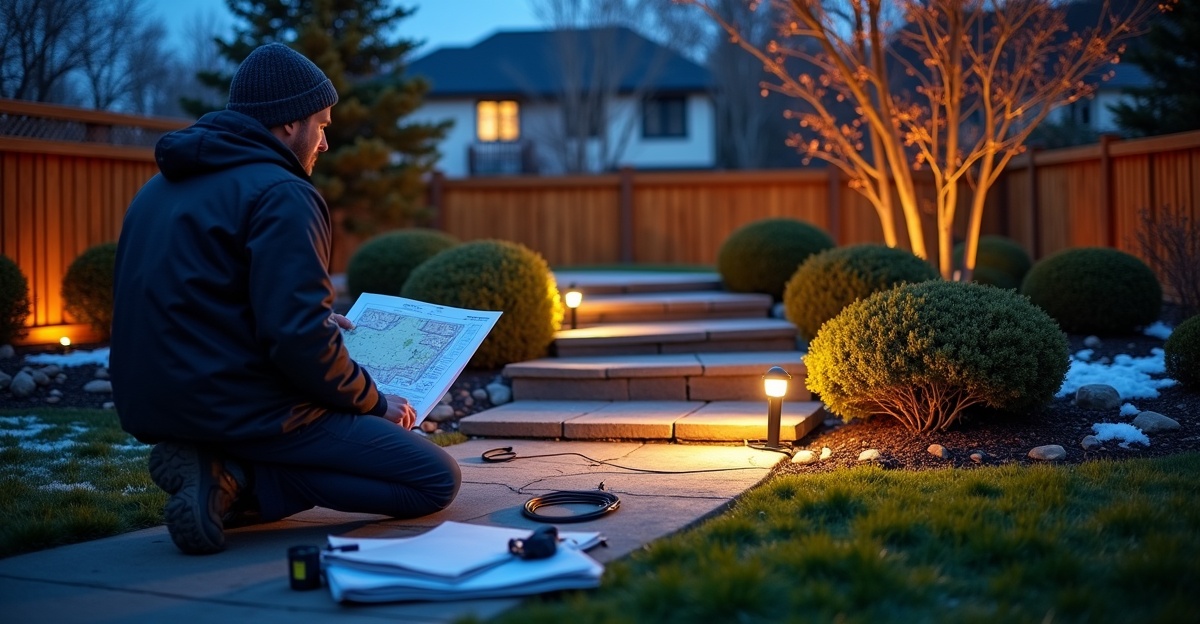
Hiring a landscape lighting designer means we plan the system around safety, performance, and long-term reliability instead of placing fixtures without strategy. We evaluate the property layout, local climate factors like Idaho’s freeze-thaw cycles and snow loads, voltage requirements, glare control, and future expansion before installation begins. Our approach delivers balanced illumination that performs consistently year after year.
Key Takeaways
- We prioritize safe navigation by addressing pathways, steps, entry points, and dark zones that increase trip hazards and security concerns.
- We build professional systems with detailed planning for beam angles, transformer sizing, load calculations, zoning, and wire protection to prevent voltage drop and early failure.
- We account for climate-specific factors such as snow accumulation, soil movement, drainage patterns, and irrigation coordination during the design phase.
- We install contractor-grade systems that provide stronger durability, scalable capacity, and predictable long-term maintenance compared to DIY kits.
- We provide a structured lighting plan that aligns with future landscaping, hardscaping, and broader property improvements.
Safety, Function, and Long-Term Performance Start with Thoughtful Outdoor Lighting Design
A landscape lighting designer starts with safety and movement. We evaluate how people walk through the property at night and identify areas where poor visibility increases the risk of trips and falls. Path lighting, step illumination, and clearly lit entry points create safe navigation and defined routes. This approach reduces dark patches and improves confidence when moving around the property after sunset.
Professional outdoor lighting design also extends the use of outdoor spaces. Patios, decks, outdoor kitchens, and gathering areas stay usable well into the evening. For businesses, extended lighting hours improve visibility for customers and staff while supporting smoother operations after dark. We approach every plan with function first and aesthetics second, so lighting works as well as it looks.
Security plays a major role in professional landscape lighting. Eliminating dark zones around doors, driveways, garages, and property edges improves visibility and discourages unwanted activity. Thoughtful placement supports effective outdoor security lighting without creating glare or harsh shadows.
In Idaho Falls and surrounding areas, climate adds another layer of consideration. Snow accumulation can bury low fixtures. Ice creates reflective glare that must be managed. Irrigation systems shift soil and damage shallow wiring. Temperature swings affect connections and fixture stability. A qualified landscape lighting designer accounts for these realities from the start. We plan fixture height, burial depth, drainage, and wire protection to handle freeze-thaw cycles and heavy snow loads common in this region.
What a Professional Landscape Lighting System Includes (Beyond Fixtures in the Ground)
Professional landscape lighting goes far beyond placing lights in strategic spots. Comprehensive lighting design services begin with a full site evaluation. We assess elevation changes, architectural features, landscaping elements, and existing utilities. From there, we create a detailed lighting layout that defines beam angles, fixture types, spacing, and zoning.
Proper system design includes:
- Beam spread and precise aiming to highlight focal points without spill light
- Voltage system planning and load calculations to avoid transformer overload
- Correct transformer sizing with future capacity planning
- Zoning controls that separate pathways, accent features, and gathering spaces
These technical steps support stable performance and balanced illumination. Without them, systems often suffer from voltage drop, inconsistent brightness, or premature failure.
Fixture placement and glare control also matter. Balanced lighting prevents over-lighting that flattens landscape textures or casts strong, distracting shadows. Subtle uplighting and cross-lighting create depth and dimension. For inspiration on strategic placement, we often reference approaches similar to those in highlighting landscaping with outdoor lighting.
Wiring protection is equally important. We bury cable at appropriate depths, use weather-rated connections, and avoid routing near irrigation lines when possible. Drainage planning reduces corrosion risk and protects components from pooling water during snowmelt.
Energy efficiency is now the standard. LED systems provide consistent output with low power consumption and long service life. Compared to older halogen systems, LEDs reduce maintenance frequency and operational costs.
We also coordinate lighting with existing landscaping and hardscaping. A proper landscape lighting installation supports long-term property plans, including future patios, retaining walls, or plantings. Lighting should adapt as the property evolves.
DIY vs. Hiring a Landscape Lighting Designer: Practical Differences to Consider
DIY lighting kits can work for small, simple areas. A short garden path or small patio may benefit from a plug-and-play system. However, larger properties or complex layouts require more thoughtful planning.
The differences include:
- Planning: DIY kits rely on preset layouts. A landscape lighting designer creates a plan based on property layout, traffic flow, and goals.
- Equipment quality: Big-box fixtures often use lighter materials. Contractor-grade systems use heavier housings, sealed connections, and longer-lasting components.
- Transformer and load capacity: Basic kits include limited-capacity transformers. Professional landscape lighting includes properly sized transformers with calculated loads and room for expansion.
- Durability: Temporary, shallow wiring shifts under Idaho’s soil movement. Professionally installed cable includes protection designed for snow, moisture, and freeze-thaw cycles.
- Maintenance: DIY systems frequently require repositioning and part replacement. A professionally installed system follows a long-term service plan with predictable upkeep.
We don’t dismiss DIY outright. Smaller projects with minimal wiring and no irrigation conflicts may perform adequately. Still, many property owners eventually call for assistance after experiencing uneven lighting, damaged wiring, or poorly placed fixtures.
For those weighing options, reviewing whether professional landscape lighting is worth it helps clarify the long-term value of experienced planning and installation.
Durability and Maintenance in Idaho’s Climate
Idaho’s climate demands careful planning. Freeze-thaw cycles cause soil expansion and contraction, which shifts fixture alignment and stresses wire connections. Heavy snow can bend or bury low-profile fixtures. Without proper installation depth and hardware selection, systems quickly lose alignment.
Drainage planning reduces standing water around fixtures and junction points. We use corrosion-resistant materials to limit failure caused by moisture exposure. Connection points must be sealed properly to block water intrusion.
Irrigation systems present additional risks. Poor coordination between lighting and sprinkler lines often leads to cut wires and short circuits. We plan lighting routes with irrigation in mind and protect vulnerable crossings.
Lighting should integrate into a long-term landscaping strategy. It shouldn’t function as a decorative afterthought. Proper planning allows for adjustments as plant material matures and outdoor structures expand.
Maintenance remains part of any outdoor system. Periodic adjustments keep beam angles aligned. Cleaning lenses improves brightness consistency. Connection checks prevent small issues from becoming major repairs. LED systems significantly reduce bulb replacements and lower energy use compared to older technologies.
For homeowners exploring long-term systems, understanding permanent outdoor lighting systems clarifies which features support durability in harsh climates.
When Hiring a Landscape Lighting Designer Makes the Most Sense
Certain properties benefit significantly from professional planning. Large lots with multiple pathways, tiered elevations, retaining walls, and detailed architecture require strategic coordination. Without a cohesive design, lighting appears scattered and inconsistent.
Properties integrating irrigation systems, drainage controls, outdoor kitchens, and phased landscaping improvements also demand advanced planning. A landscape lighting designer ensures today’s installation supports tomorrow’s additions.
Homeowners planning expanded residential outdoor lighting often benefit from a centralized strategy rather than incremental add-ons. Businesses also rely on experienced design. Consistent illumination enhances customer experience and supports safety standards in commercial outdoor lighting applications.
In many cases, the decision comes down to long-term reliability. Upfront savings from basic systems can disappear through repeated troubleshooting and fixture replacement. Professional design supports improved curb appeal and positive buyer perception, especially when lighting complements architectural features and landscaping.
What to Expect from a Local Consultation and Lighting Assessment
A consultation with a landscape lighting designer typically begins with an on-site evaluation. We review pathways, structures, landscaping, electrical access points, and existing systems. We discuss goals, usage patterns, and budget expectations.
Next, we outline preliminary design concepts and fixture recommendations. The discussion covers layout zones, transformer placement, wiring routes, and installation timelines. We explain what the landscape lighting installation process involves and how future expansion can be accommodated.
Transparency matters. We clarify system layout, equipment quality, and ongoing maintenance expectations. Cost details reflect fixture types, scope of work, and site conditions.
Local expertise plays a major role in Idaho Falls and surrounding communities. Soil composition, snow patterns, irrigation practices, and seasonal temperature swings influence design decisions. We incorporate those realities into every outdoor lighting design plan.
Property owners who want clarity about their options can request a consultation or lighting assessment at our contact page. A professional evaluation helps determine whether hiring a landscape lighting designer aligns with long-term property goals and performance expectations.