
Why Are Retaining Walls Important For Landscaping?
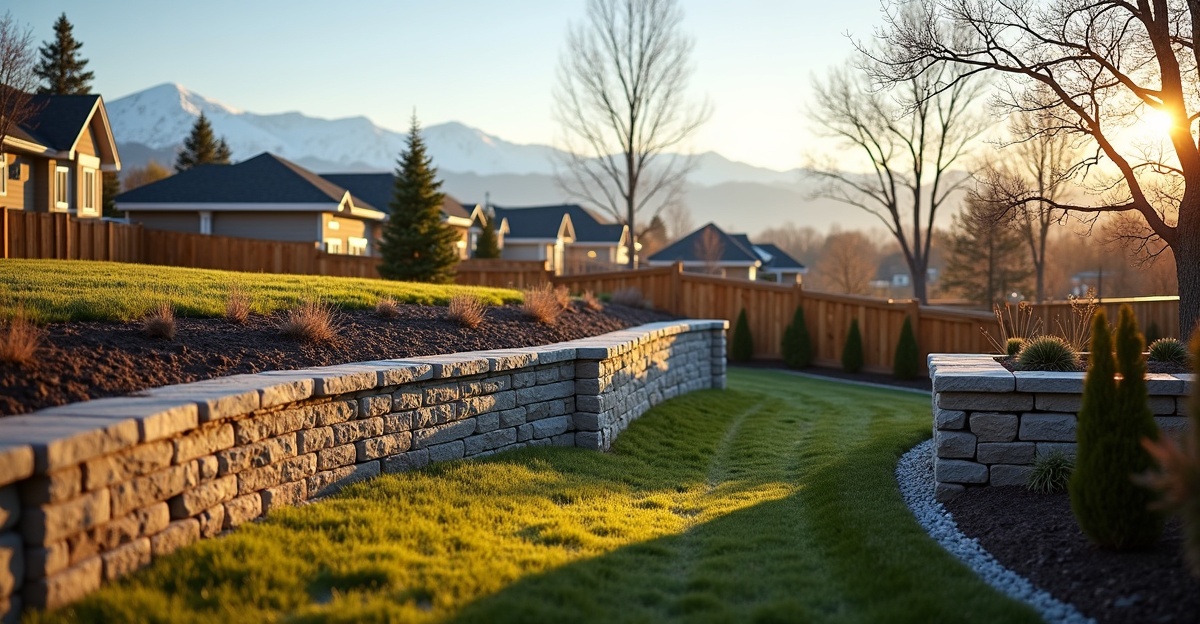
Retaining walls do more than improve appearance. We use them to provide critical structural support on sloped yards, control drainage, and shield foundations from soil movement. In areas like Idaho Falls, where runoff and freeze–thaw cycles strain landscapes, we rely on retaining walls to reduce erosion, create functional level space, and protect long-term property value.
Key Takeaways
- We use retaining walls to stabilize sloped or uneven terrain and stop erosion and washouts.
- We design proper drainage systems to reduce hydrostatic pressure and limit freeze–thaw damage.
- We engineer structural walls to handle load-bearing demands, while decorative walls enhance visual appeal and manage light soil retention.
- We build retaining walls to safeguard foundations, driveways, patios, and other hardscapes from shifting soil and water damage.
- We choose materials, prepare solid bases, and install reinforcement systems to ensure lasting performance and durability.
The Core Benefits of Retaining Walls for Stability, Safety, and Property Value
Retaining walls play a structural role in landscaping. They hold back soil, stabilize slopes, and control how land behaves over time. These structures are engineered to resist lateral pressure from soil and water, especially on sloped or uneven terrain.
In Idaho Falls, that strength matters. Sloped lots, seasonal runoff, shifting soils, and freeze-thaw cycles all place stress on landscapes and foundations. Without proper support, soil moves. Lawns settle. Driveways crack. Foundations can become exposed or stressed.
We view retaining wall landscaping as a practical investment in stability. Key benefits include:
- Structural support for sloped or uneven yards
- Prevention of soil erosion and washouts
- Improved drainage management
- Creation of usable, level outdoor space
- Reduced safety risks from unstable ground
- Long-term protection of foundations and hardscapes
These improvements deliver immediate and lasting value, especially when viewed as part of the broader benefits of professional landscaping. A properly built wall prevents soil migration and water pooling that could otherwise damage patios, walkways, fencing, and planted areas. It also enhances curb appeal by giving a landscape clean, intentional lines.
Property owners often ask whether outdoor improvements truly impact value. Strategic upgrades to the exterior can influence resale potential, and we discuss similar considerations in our overview of how outdoor lighting increases home value. Structural landscaping features like retaining walls serve a similar function: they protect the investment and improve how a property presents on the market, without overpromising savings.
Retaining walls are never purely cosmetic. They are structural elements that safeguard land, landscaping, and property for years to come.
Retaining Wall Landscaping and Erosion Control Solutions in Idaho Falls
Erosion is a common concern in eastern Idaho. Spring snowmelt, heavy rains, and freeze-thaw cycles create conditions where soil shifts and washes away. Sloped lots are especially vulnerable.
Retaining wall landscaping addresses these regional challenges directly. By holding back soil and reshaping elevation changes, walls reduce downhill movement and protect planting beds, turf, and hardscapes.
Effective erosion control solutions go beyond stacking blocks or stone. Proper construction typically includes:
- A compacted base for structural stability
- Gravel backfill behind the wall
- Drainage pipe to redirect water
- Surface grading that guides runoff away from structures
Drainage is critical. Water pressure builds behind a wall during snowmelt or heavy rainfall. Without relief, that pressure can cause bulging, cracking, or premature failure. With the right gravel backfill and drain system, water passes through and away from the wall instead of collecting behind it.
In Idaho Falls, freeze-thaw cycles expand trapped moisture and increase stress on soil and structures. A well-designed retaining wall system helps control that cycle by moving water efficiently and stabilizing the soil mass.
Over time, this reduces maintenance demands. Lawns do not require frequent reshaping. Mulch stays in place. Landscape edges remain clean. Property managers and homeowners alike benefit from fewer recurring repairs due to soil displacement and runoff damage.
Structural vs. Decorative Retaining Walls: Understanding the Difference
Not all retaining walls serve the same purpose. Understanding the difference between structural and decorative retaining walls helps determine what a property truly needs.
Structural retaining walls are engineered for load-bearing. They support significant soil weight and resist lateral pressure from slopes. These walls often require reinforcement, deeper footings, and carefully integrated drainage systems. Height, soil type, and slope severity all influence the design.
Decorative retaining walls, by contrast, focus primarily on appearance. They are typically shorter and used to create visual tiering or define planting areas. However, they can still provide minor soil retention and erosion control. Even a small wall may help stabilize a garden bed or reduce surface runoff.
Local soil conditions and grading determine which type is appropriate. Steeper slopes or taller walls demand engineered solutions. Minor grade adjustments or light landscape shaping may allow for simpler designs.
A one-size-fits-all approach does not work. Wall height, drainage needs, climate conditions, and surrounding structures must all factor into the design. In Idaho Falls, freeze-thaw cycles and seasonal moisture changes require especially careful planning. What works in a mild climate may fail here.
When a Retaining Wall Is Necessary vs. Optional
Some scenarios clearly require a retaining wall. Others depend on long-term goals and site conditions.
A retaining wall is generally necessary when:
- The property has a significant slope or elevation change.
- Soil erosion or washout is ongoing.
- Drainage problems affect foundations, patios, or driveways.
- Usable yard space must be created on a sloped lot.
In these cases, the wall serves as a structural solution. Ignoring the issue often leads to worsening damage and higher repair costs later.
A retaining wall may be optional when the slope is minor and soil remains stable. In those instances, low decorative tiering can enhance curb appeal without requiring heavy structural reinforcement.
Each property in Idaho Falls carries unique grading and runoff patterns. Spring meltwater and heavy rains can expose weaknesses that remain hidden during dry seasons. For that reason, evaluating long-term performance rather than focusing solely on short-term appearance is essential.
An on-site evaluation helps determine whether a wall is essential for protection or simply beneficial for visual improvement. Either way, the decision should align with goals for safety, durability, and manageable upkeep.
Materials and Design Considerations for Long-Term Performance
Material choice affects strength, longevity, maintenance, and overall appearance. Selecting the right option depends on the wall’s height, purpose, and soil conditions. Exploring different landscape retaining wall ideas can help property owners compare materials, layouts, and styles that fit both the site conditions and the overall landscape design.
Concrete block systems are widely used for structural retaining walls. They offer durability, modular flexibility, and consistent performance when installed correctly.
Natural stone provides a timeless look and blends well with Idaho’s landscape. It delivers long-lasting results when properly engineered.
Poured concrete works well for larger structural applications. It offers high strength but requires professional forming and drainage planning.
Timber is cost-effective and suitable for shorter walls. However, it generally has a shorter lifespan, especially in climates with freeze-thaw cycles and moisture exposure.
Regardless of material, long-term performance depends on three core factors:
- Proper base preparation
- Effective drainage design
- Reinforcement when required by height or soil pressure
A stable, compacted base prevents settling. Drainage systems reduce water pressure buildup. Reinforcement increases load-bearing capacity for taller walls.
Maintenance should remain straightforward but consistent. Periodic inspections help identify minor shifting, cracking, or drainage clogs before they escalate. Keeping weep holes clear and checking for soil movement after heavy runoff reduces the risk of larger structural problems.
Professional design and installation support compliance with local grading and drainage standards. In Idaho Falls, that attention to detail makes a measurable difference in how a wall performs year after year.
Planning Your Retaining Wall Project in Idaho Falls
Successful projects begin with local expertise. Soil composition, temperature swings, snow load, and seasonal runoff patterns all influence performance. Experience with Idaho Falls properties allows for informed design decisions that account for these realities.
Compliance with municipal grading or drainage requirements may apply, especially for taller structural retaining walls. Addressing these considerations early keeps projects on schedule and prevents costly revisions.
Common Questions About Retaining Walls
How much does a retaining wall cost? Cost varies based on wall height, materials, soil conditions, and drainage needs. Taller structural walls with reinforcement and integrated drainage systems typically cost more than short decorative walls.
How long do retaining walls last? Lifespan depends on material and installation quality. Concrete block and poured concrete walls can last decades with proper construction and drainage. Timber walls generally have shorter service lives due to moisture exposure.
Are permits required? Permits may be required for taller structural retaining walls, particularly when they exceed local height thresholds or affect drainage patterns. Checking local regulations before construction helps avoid delays.
Why is drainage so important? Drainage is essential. Without proper water management, even well-built walls can fail prematurely due to hydrostatic pressure and freeze-thaw stress.
Property owners, business owners, and developers in Idaho Falls benefit from professional guidance when evaluating site conditions and long-term goals. A detailed, on-site assessment identifies grading concerns, runoff patterns, and structural needs before construction begins.
We encourage scheduling a consultation to determine the most effective retaining wall landscaping solution for your property in Idaho Falls and the surrounding areas.