
Landscape Lighting Wiring Methods: Types and Best Practices
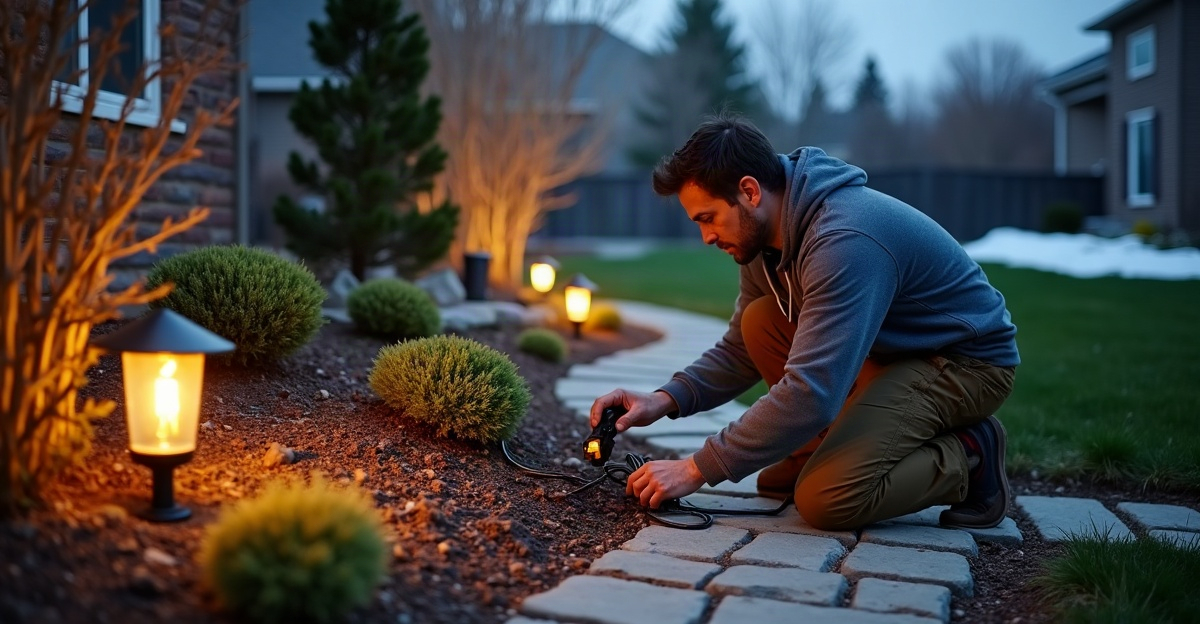
Landscape lighting wiring methods include daisy-chain, hub, and loop layouts. We select each method based on fixture load, cable length, property size, and brightness goals. Proper wire gauge, transformer capacity, weatherproof connections, and cable routing prevent voltage drop, dimming, and seasonal damage across Idaho Falls properties.
Key Takeaways
- We recommend daisy-chain wiring for compact, low-load lighting areas with short cable runs. Distant fixtures may dim on longer runs.
- Hub wiring supports separate lighting zones, steady voltage, simple troubleshooting, and future expansion.
- Loop wiring sends power from two directions. It works well for long runs and larger layouts that need even brightness.
- We calculate fixture load, choose wire gauge for the run length, and keep transformers below maximum capacity.
- We use weatherproof direct-burial connections, protect cable from irrigation and snow removal, and inspect each system every spring.
Choose the Right Low-Voltage Wiring Layout for Your Property
This guide covers low-voltage landscape lighting, the most common system for homes and many commercial landscapes. A low-voltage system uses an outdoor transformer to step household current down to roughly 12 volts before it travels through cable to each fixture. Line-voltage outdoor wiring is a different category of work that can involve permits, code requirements, and a licensed electrician.
No single wiring method is best for every project. The right layout depends on how many fixtures you plan to run, the total load, the size of the property, the longest cable run, how consistent you want the brightness to be, your budget, and whether you expect to add lights later. On Idaho Falls and eastern Idaho properties, layout planning also has to account for irrigation zones, seasonal digging, snow removal, and freeze-thaw movement in the soil.
- A daisy-chain run suits simpler, shorter runs with lower fixture loads when voltage drop is managed.
- A hub layout suits properties where consistent voltage and easier troubleshooting are priorities.
- A loop layout suits longer runs or larger systems where more even brightness justifies extra cable and planning.
If you are still deciding which areas to light, our guide on how to choose landscape lighting is a good starting point before you plan cable routes.
Daisy-Chain, Hub, and Loop Wiring Methods Compared
All three layouts describe how cable is routed from the transformer to the fixtures. In each case, the fixtures themselves are connected in parallel, so every light draws from the same circuit instead of passing current through the next fixture. The difference is how far power must travel to reach each light, and that distance is what drives voltage drop.
| Wiring method | Best use case | Primary advantage | Limitation | Cable use | Voltage-drop risk | Installation complexity |
|---|---|---|---|---|---|---|
| Daisy-chain | Short paths, small beds, and compact layouts with few fixtures | Simple and economical to install | Fixtures at the end of a long or heavily loaded run may dim | Lowest | Highest on long runs | Low |
| Hub | Grouped fixtures, lighting zones, varied fixture distances, and planned expansion | More consistent voltage and easier troubleshooting | Requires more planning and a central connection point | Moderate to high | Low to moderate when lead lengths are balanced | Moderate |
| Loop | Long perimeter runs and larger layouts that need even brightness | Power reaches fixtures from two directions | Uses more cable and needs careful load planning | Highest | Low | Moderate to high |
Daisy-Chain Runs
A daisy-chain run follows one cable route and connects fixtures one after another along the way. It works well for a short garden path or a compact planting bed. On a long or heavily loaded run, the fixtures farthest from the transformer receive less voltage and can look noticeably dimmer than the first lights on the line.
Hub Layouts
A hub layout runs a main cable from the transformer to a central connection point, then branches shorter leads to individual fixtures or small groups. Keeping branch lengths similar helps every fixture receive comparable voltage. Hubs also make it easier to isolate a problem, divide the property into lighting zones, and add fixtures later.
Loop Layouts
A loop sends cable out from the transformer and back again, with fixtures connected along the route. Because power reaches the run from both ends, voltage stays more even across long distances. Loops are a strong fit for perimeter lighting and larger landscapes, but they require more wire and careful load calculations.
Prevent Dimming and Flickering With Proper Voltage, Wire, and Transformer Planning
Voltage drop is the gradual loss of voltage as electricity travels through a cable. The longer the run and the heavier the load, the more voltage is lost before it reaches the last fixture. The result can be dimmer lights, uneven brightness, flickering, or shorter fixture life. Voltage drop is affected by:
- Total length of the cable run
- Wire gauge
- Total fixture wattage or VA load on the run
- Fixture spacing and layout
- Transformer output and available voltage taps
- Quality and condition of splices and connectors
Modern LED fixtures draw far less power than halogen lamps, which lightens the load on each run. Low wattage does not remove the need for good design, though. Long runs, undersized cable, poor splices, damaged insulation, and overloaded transformers can still cause dimming and early failures. Our comparison of LED vs halogen landscape lighting explains how a lamp upgrade can change transformer loading.
Choosing Wire Gauge
Landscape cable is commonly sold in sizes such as 12/2, 14/2, and 16/2. A lower gauge number means heavier wire that can carry more load over a longer distance. The correct size comes from a load calculation and the length of the run, not a one-size-fits-all rule. We follow the fixture and transformer manufacturers’ specifications and check voltage at the fixtures when appropriate.
Sizing the Transformer and Power Supply
- Add up the wattage or VA rating of every fixture on the system.
- Leave reasonable capacity for reliability and future additions instead of running the transformer at its maximum rating.
- Use an outdoor-rated transformer designed for landscape lighting.
- Confirm the outdoor outlet is properly protected, including GFCI protection where required.
- Never modify a transformer, bypass its safety features, or overload an existing circuit.
When we evaluate a property, we look at fixture locations, total load, the longest cable run, wire gauge, transformer output, connection quality, and plans for future expansion.
Protect Cable Runs and Connections From Weather, Irrigation, and Damage
Poor connections are one of the most frequent causes of landscape lighting failures, often more so than the cable itself. Moisture that reaches an exposed splice can lead to corrosion, intermittent flickering, or a dead section of lights. Good connection practices include:
- Using manufacturer-approved weatherproof connectors rated for direct burial where applicable
- Keeping connection points accessible for inspection and maintenance when practical
- Choosing durable, weather-rated materials suited to outdoor exposure
- Avoiding exposed splices, indoor-rated wire nuts, loosely twisted wire, and unprotected connections
Cable routing matters just as much. We plan routes away from likely digging zones, edging paths, aeration areas, and sprinkler heads, and we mark them so future irrigation repairs, planting, fencing, or trenching do not cut through the line. Coordinating lighting with your irrigation system keeps sprinkler work from disturbing buried cable.
Burial depth has no universal answer. The right depth depends on the system type, manufacturer instructions, and local requirements. Line-voltage wiring carries different safety, permit, code, and licensing requirements than low-voltage landscape lighting, so confirm local requirements in Idaho Falls and consult a qualified professional when in doubt.
Plan for Idaho Falls Seasonal Conditions and Perform Spring Inspections
Eastern Idaho weather is hard on outdoor wiring. These seasonal risks deserve attention:
- Freeze-thaw movement can shift shallow cable and stress connections.
- Snow removal equipment and plowing can damage exposed fixtures and cable near driveways and walkways.
- Irrigation work, sprinkler repairs, planting, and seasonal maintenance can cut or disturb buried cable.
- Weather exposure wears on connectors, insulation, transformers, timers, and photocells over time.
A spring inspection before peak outdoor use catches most of these problems early. Look for damaged fixtures, loose connections, shifting soil, exposed cable, and irrigation-related damage. Test each lighting zone for even brightness, and confirm that timers, photocells, transformers, breakers, and GFCI outlets are working correctly. Give extra attention to areas near driveways, walks, planting beds, sprinkler heads, and anywhere snow was piled or plowed.
For more on positioning fixtures around these high-traffic areas, see our guide on where to place landscape lighting.
Troubleshoot Common Wiring Problems and Know When to Call a Professional
Fixtures farther from the transformer are dimmer. Likely causes include voltage drop, an excessive run length, undersized cable, an overloaded transformer, or a long daisy-chain layout.
Lights flicker intermittently. Check for loose, corroded, damaged, or non-weatherproof connections, damaged insulation, or a problem with the transformer, timer, photocell, or GFCI outlet.
One section of the system stops working. Inspect for damaged cable, a failed splice, disturbed connections, irrigation damage, or a failed fixture.
Lights worked after installation but failed after winter or irrigation repairs. Look for freeze-thaw movement, snow-removal damage, cut wiring, and wet or compromised connectors.
Breakers, GFCI outlets, timers, photocells, or transformers are not operating as expected. Verify the protected power source, and contact a qualified professional when troubleshooting extends beyond the low-voltage system.
Professional installation is usually the safer choice when a layout has long runs, many fixtures, inconsistent brightness, repeated failures, complex load calculations, or future expansion plans. It is also the right call for line-voltage wiring, uncertain code or permit requirements, electrical safety concerns, and cable routes that cross areas disturbed by irrigation, hardscaping, trenching, or snow removal. Our article on hiring a landscape lighting designer covers what a professional plan includes.
Landscape Lighting Wiring FAQs
What is the best wiring method for landscape lighting?
No single method is best. Daisy-chain runs suit short, low-load areas, hub layouts deliver more consistent voltage and easier troubleshooting, and loop layouts keep brightness even on long runs and larger systems.
What is the landscape lighting loop wiring method?
The cable runs out from the transformer and returns to it, with fixtures connected along the route. Power reaches the fixtures from two directions, which helps keep voltage even.
Can I daisy-chain low-voltage landscape lights?
Yes, for shorter runs with modest loads. The fixtures are still connected in parallel along the cable. Follow the manufacturer’s wiring instructions and watch for dimming at the end of the run.
Why are my landscape lights dim at the end of the run?
The usual cause is voltage drop from a long run, undersized cable, a heavy load, or poor connections. Heavier cable, a hub or loop layout, or rebalancing the load can help.
What gauge wire should I use for landscape lighting?
Common sizes include 12/2, 14/2, and 16/2. The right gauge depends on the total load and run length, based on the fixture and transformer manufacturers’ specifications.
How do I calculate transformer size for landscape lighting?
Add up the wattage or VA of every fixture, then choose an outdoor-rated transformer that leaves reasonable capacity for reliability and future additions.
How deep should low-voltage landscape lighting wire be buried?
It depends on the system type, manufacturer instructions, and local requirements. Confirm local requirements before trenching.
Can landscape lighting wire be damaged by sprinklers or freezing weather?
Yes. Irrigation repairs, aeration, and edging can cut cable, and freeze-thaw cycles can shift it. Marked routes, weatherproof connectors, and a spring inspection reduce the risk.
When should I hire a professional for landscape lighting wiring?
Consider professional help for long runs, many fixtures, repeated failures, line-voltage work, or uncertain code and permit requirements.
If you need help designing a reliable landscape lighting layout, repairing inconsistent fixtures, or protecting outdoor lighting around irrigation and seasonal maintenance, Lawrence Landscaping Inc. can evaluate your Idaho Falls-area property and recommend a practical solution. Request a landscape lighting consultation to get started.