
LED vs Halogen Landscape Lighting: Which Is Better?
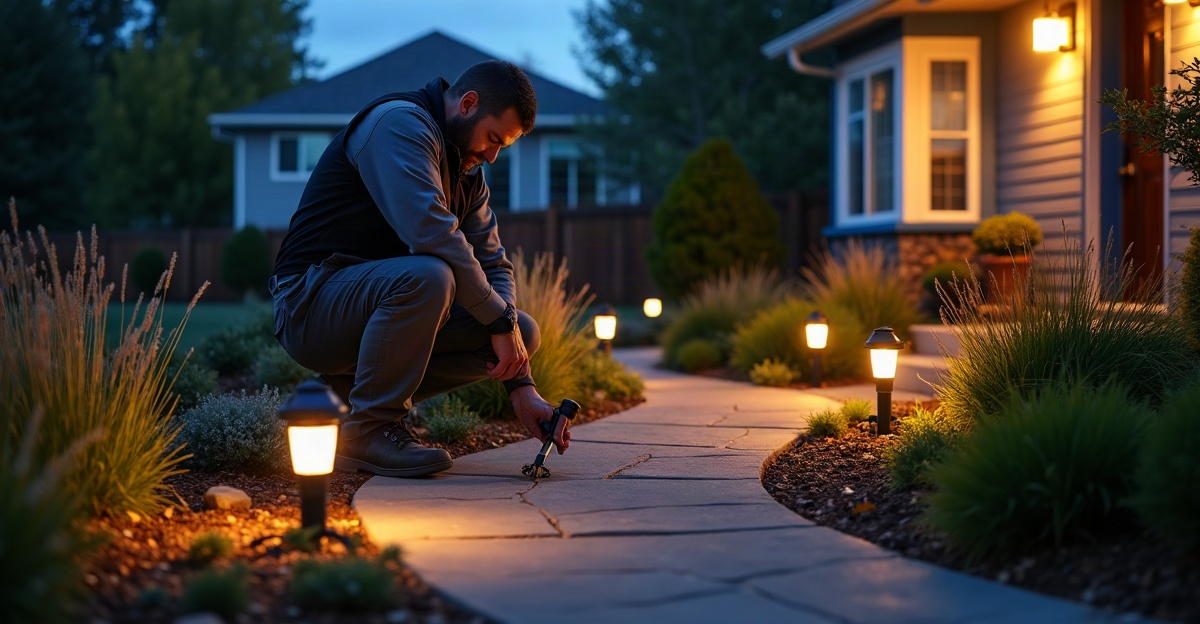
For most Idaho Falls properties, we recommend LED landscape lighting for new installations and long-term upgrades. LED uses less energy, generates less heat, and needs fewer lamp replacements. Halogen can serve as a practical short-term choice for working existing systems. We base the final choice on fixture condition, transformer compatibility, wiring, voltage distribution, and weather exposure.
Key Takeaways
- LED typically delivers lower operating costs, longer lamp life, and less maintenance than halogen.
- We compare lumens, beam spread, color temperature, color rendering, and glare control. Wattage alone doesn’t tell the full story.
- Warm white lighting between 2700K and 3000K often creates a natural look for residential paths, entries, and landscaping.
- LED retrofits require a full system assessment. Older transformers, sockets, wiring, and dimmers may not support LED equipment.
- Outdoor-rated fixtures, sealed connections, proper drainage, and seasonal inspections help us maintain reliable performance in Idaho Falls weather.
The Practical Answer for Most Idaho Falls Properties
For most new installations and long-term upgrades, LED is the better choice for Idaho Falls properties. It uses less energy, produces less heat, and usually needs fewer lamp replacements than halogen.
In the LED vs. halogen landscape lighting decision, we should look beyond the purchase price of a bulb. The right system improves walkway safety, curb appeal, tree uplighting, commercial visibility, and dependable year-round operation without creating unnecessary maintenance.
Halogen can still make sense as a temporary option. If an existing low-voltage system works properly, the fixtures and wiring remain in good condition, and a full upgrade does not fit the current budget, replacing failed halogen lamps may keep the system operating. Still, for most planned improvements, LED offers stronger long-term value.
LED is not automatically the right answer for every fixture. A successful conversion depends on fixture condition, sockets, transformers, wire runs, connections, voltage distribution, beam angles, drainage, and fixture placement. We recommend assessing the complete system before replacing every lamp. Our landscape lighting services address these system-level details from the start.
LED and Halogen Landscape Lighting Side by Side
| Factor | LED Landscape Lighting | Halogen Landscape Lighting |
|---|---|---|
| Initial cost | Usually higher for quality lamps or fixtures | Usually lower bulb purchase price |
| Energy consumption | Lower wattage for comparable usable light output | Higher wattage and higher energy demand |
| Operating cost | Generally lower over time | Generally higher over time |
| Typical lifespan | Longer, but depends on fixture, driver, voltage, and installation quality | Shorter lamp life with more frequent replacements |
| Maintenance | Lower maintenance, though inspections remain necessary | More lamp changes and ongoing labor |
| Brightness | Available in many lumen outputs and beam patterns | Bright, warm output but with greater energy use |
| Color and rendering | Wide color-temperature range; quality LEDs offer natural color rendering | Traditionally warm light with strong color appearance |
| Heat output | Lower heat at the lamp face | Higher heat output |
| Compatibility | May require compatible sockets, transformers, and dimmers | Works with existing halogen-rated systems when components remain sound |
| Cold-weather performance | Quality outdoor-rated systems generally perform well in cold conditions | Can operate in cold conditions but creates more heat and uses more power |
| Best use cases | New systems, major upgrades, and efficient long-term lighting | Short-term maintenance of a functional existing system |
Landscape lighting halogen vs. LED comparisons often focus only on wattage. Wattage measures energy use, not brightness. We should compare lumens, beam spread, color temperature, color rendering, glare control, and fixture placement to judge the actual effect on the property.
LED commonly costs more at the beginning but reduces energy use and replacement needs over time. Halogen lamps often cost less to buy, yet their higher wattage, greater heat output, and shorter replacement cycle can increase ownership costs.
Actual LED life varies. Fixture quality, driver quality, heat management, operating hours, voltage stability, installation conditions, and routine maintenance all affect performance. A quality LED system is lower maintenance, but it is never maintenance-free.
Upfront Cost, Energy Use, and Long-Term Ownership
The best landscape lights LED vs. halogen choice comes from comparing total ownership cost. That includes electricity, replacement lamps, labor, transformer capacity, fixture upgrades, wiring repairs, and any redesign work needed to correct existing problems.
A simple comparison helps frame the decision. A low-voltage halogen lamp uses more wattage and generally needs replacement more often. A lower-wattage LED alternative can reduce energy demand and lamp-change labor over several years. Actual savings depend on operating hours, local electricity rates, fixture count, product quality, installation conditions, and the wattage of each lamp.
An LED upgrade can require an upfront investment. Some properties need compatible LED lamps, new fixtures, transformer changes, repaired wire connections, or a complete redesign. We should distinguish among three common situations:
- LED retrofit bulbs fit into certain existing fixtures, but compatibility must be confirmed.
- Purpose-built integrated LED fixtures offer a complete fixture-and-light-source system, often with better optical control and weather protection.
- Existing low-voltage halogen fixtures may remain usable, but their sockets, lenses, seals, and internal connections must be in sound condition.
Replacing a halogen bulb with an LED bulb is not always a direct swap. Older transformers may have minimum-load requirements, and poor voltage distribution can affect light output across the system. Before spending on replacement lamps, we recommend reviewing how to choose landscape lighting based on the property’s goals and existing equipment.
Light Quality and the Best Choice for Each Lighting Goal
For residential landscaping, warm white lighting around 2700K to 3000K commonly creates the most natural and welcoming result. It complements stone, plants, wood, and entry architecture without making the property feel overly stark.
Cooler color temperatures can support commercial visibility or certain security goals. However, they can look harsh in residential landscapes if brightness and placement are not controlled. Higher-quality LEDs can also provide strong color rendering, which helps plants, masonry, architectural finishes, and entry features appear more natural after dark.
Walkways and steps need even illumination, durable path fixtures, and careful glare control. Light should define the walking surface without shining into windows or eyes. Proper placement also supports safer movement around entrances, driveways, and grade changes. Our guidance on outdoor lighting safety explains why controlled light is more useful than excessive brightness.
Tree uplighting needs the right beam angle and adjustable fixtures. Narrow beams can accent tall trunks or architectural branches, while wider beams can wash a broader canopy. Lower-heat LED fixtures also offer a practical advantage around plant material, provided we install them with suitable clearance and drainage.
Entryways and curb appeal benefit from layers of warm light. We combine controlled brightness at the door, subtle path lighting, and selective accent lighting on landscape or architectural features. For additional planning ideas, explore these residential lighting design ideas.
Commercial properties require consistent visibility, pedestrian safety, maintenance planning, and consideration of security or local code requirements where applicable. The brightest lamp is rarely the best choice. Controlled brightness, even coverage, and reduced glare create a more usable property after dark.
Compatibility, Transformers, and Idaho Falls Weather Conditions
A professional assessment examines the complete lighting system rather than the bulb alone. We inspect fixtures, sockets, transformers, wire runs, connections, beam angles, voltage distribution, drainage, and placement before recommending halogen vs. LED landscape lighting.
Long wire runs, undersized wire, overloaded transformers, weak connections, and uneven voltage can create dim fixtures or inconsistent output. Converting halogen to LED can also change transformer loading. Some older transformers need a minimum load and may not operate properly after a large LED conversion.
Older fixtures, sockets, dimmers, wiring, and transformers can limit retrofit options. A full assessment identifies whether a few LED retrofit lamps make sense or whether new fixtures and system improvements will provide a better result. We often recommend professional landscape lighting design when the property has aging equipment, long runs, or multiple lighting goals.
Idaho Falls and Eastern Idaho landscapes face cold temperatures, freeze-thaw cycles, long seasonal darkness, snow removal, irrigation overspray, shifting soil, and plant growth. Quality LED fixtures generally perform well in cold weather, but reliable operation depends on weather-rated components and correct installation.
We use outdoor-rated fixtures, sealed connections, proper burial depth, drainage, and protection from moisture. Fixtures also need protection from snowplows, shovels, irrigation spray, soil movement, and accidental damage during seasonal maintenance.
Maintenance Expectations and Questions to Ask Before Upgrading
LED lighting is lower maintenance, not maintenance-free. Seasonal inspections help preserve light quality, reduce failures, and protect the investment. We check dirty lenses, loose fixtures, damaged wires, corroded connections, changing plant growth, irrigation damage, buried fixtures, and fixtures shifted by snow removal or soil movement.
Halogen systems generally need more frequent lamp replacement. Those replacements can add labor costs, especially where fixtures sit in planting beds, under mature trees, or across larger commercial sites.
Questions to Ask Before Upgrading
Before approving an upgrade, we should confirm the following:
- Are the existing fixtures and sockets in good condition?
- Is the transformer compatible with LED loads?
- Are there long wire runs or signs of voltage drop?
- Do we need replacement lamps or a full system redesign?
- What color temperature and beam spread fit the property?
- Are fixtures positioned to avoid glare, irrigation spray, and snow-removal damage?
- What seasonal maintenance will the system need?
If you are unsure whether current halogen landscape lighting can be upgraded or whether a new LED system makes more sense, Lawrence Landscaping Inc. can evaluate fixtures, wiring, transformer capacity, and lighting goals for an Idaho Falls-area property. Contact us through our landscape lighting consultation page to plan a dependable, efficient outdoor lighting system.