
Sprinkler System Winterization: How to Protect Irrigation Lines From Freezing
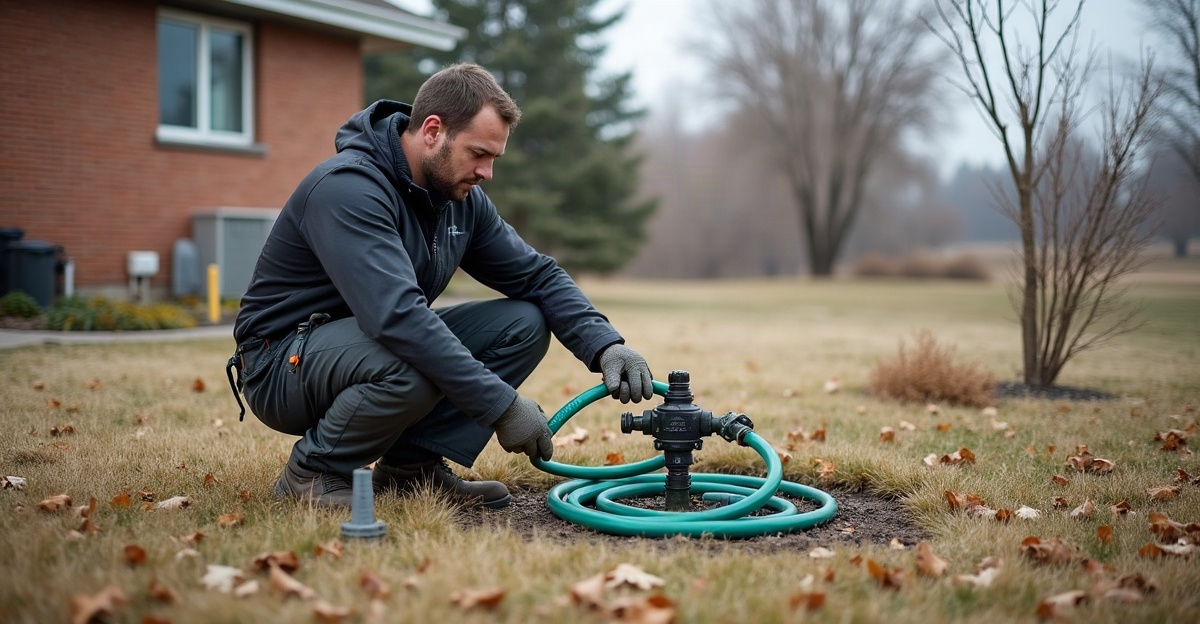
We winterize Idaho Falls sprinkler systems to protect irrigation lines and components from freeze damage. We remove or control trapped water before sustained freezing temperatures arrive. Our process includes shutting off the water supply, preserving controller settings, draining accessible equipment, and protecting exposed backflow devices, valves, drip components, and other areas that can hold water.
Key Takeaways
- We schedule winterization around local forecasts before sustained freezing conditions begin, rather than following a fixed calendar date.
- A shutoff valve stops new water from entering the system, but it doesn’t remove water trapped in pipes, valves, manifolds, or backflow assemblies.
- We use gravity drains, manual drains, and compressed-air blowouts for different system designs and drainage needs.
- We inspect and protect above-ground equipment, including hose bibs, filters, exposed pipes, pumps, drip connections, and backflow preventers.
- We recommend professional winterization for complex, aging, multi-zone, commercial, or drip irrigation systems, especially if safe blowout procedures remain unclear.
Why Idaho Falls Irrigation Systems Need Winter Protection
Idaho Falls and surrounding eastern Idaho communities can experience long cold periods, sustained freezing temperatures, frequent freeze-thaw cycles, and unpredictable fall weather. Those conditions make timely sprinkler system winterization an important part of protecting landscape equipment.
Water expands as it freezes. Any water left inside irrigation piping or components can create damaging pressure that may crack pipes, fittings, valves, manifolds, sprinkler heads, backflow prevention devices, vacuum breakers, filters, drip components, pumps, and exposed above-ground plumbing. Winterization reduces the risk of frozen pipes, damaged valves, cracked backflow preventers, and costly spring repairs. However, no service can prevent every failure in an aging, damaged, or improperly installed system.
Buried pipe has some insulation from soil, but it is not immune to freeze damage. Above-ground assemblies often face greater exposure, especially where wind and overnight temperatures reach exposed valves, hose connections, and backflow devices. Understanding how irrigation systems work helps us identify which parts require attention before winter arrives.
Protecting sprinkler pipes in winter means addressing the entire system, not simply shutting off the controller. Irrigation winterization must account for areas where water can remain trapped after the supply has been turned off.
When to Winterize Your Sprinkler System and What to Shut Down First
We recommend monitoring Idaho Falls forecasts and completing irrigation winterization before sustained freezing conditions arrive. A fixed annual date does not work reliably because fall temperatures can change substantially from one year to the next.
Start by shutting off the irrigation water supply. Then turn off watering at the controller or use its off or rain mode if available. Many modern controllers preserve schedules in a seasonal shutdown mode, which makes spring startup easier. Simply cutting power to a controller can erase programming or create unnecessary reset work, depending on the model.
Preparation should also include disconnecting and draining garden hoses, protecting hose bibs and exposed pipes where needed, and inspecting irrigation enclosures. Filters, drip lines, pumps, and other specialized equipment may require separate steps. Systems vary widely, so we should always follow the manufacturer’s instructions and the system’s established shutdown procedure.
Regular seasonal care can prevent avoidable problems. Our guide on irrigation system maintenance explains why inspections matter before and after the freezing season.
Understanding Draining, Manual Drains, and a Sprinkler Blowout
Shutting off the water, gravity draining, manual draining, and a compressed-air sprinkler blowout are different procedures. The right approach depends on the system design, pipe material, drainage layout, component specifications, and expected freezing exposure.
Turning off the water supply stops new water from entering the system, but it does not remove water already inside it. Gravity drains may release water from low points, while manual drains require opening designated drain locations. Neither method necessarily clears water from valve bodies, manifolds, low sections of pipe, backflow devices, drip tubing, or other trapped areas.
A proper sprinkler blowout generally involves isolating the irrigation supply, addressing the backflow device according to its design and applicable requirements, using suitable compressed-air equipment, clearing zones in a controlled sequence, and protecting exposed components afterward. A technician must understand the system’s configuration before introducing compressed air.
Pressure alone does not make a blowout safe. Air volume, zone design, pipe material, component limits, manufacturer requirements, and technician experience all affect the result. We should never rely on a universal PSI recommendation. Follow equipment documentation and system-specific requirements, and never exceed component limits.
A sprinkler blowout is not automatically a safe do-it-yourself task. Incorrect air use can damage pipes, fittings, sprinkler heads, valves, and backflow assemblies. It can also create serious personal safety risks. Different system layouts need different winterization methods, much like the types of irrigation systems used across residential and commercial properties.
Homeowner Winterization Tasks and Components That Are Often Missed
Homeowners can complete several lower-risk preparation tasks before freezing weather. However, we should not assume every system has the same drain locations, backflow arrangement, or winterization requirements.
Basic Preparation Checklist
Use these steps for accessible components and only where the system instructions support them:
- Shut off the irrigation water supply.
- Set the controller to off or rain mode while preserving seasonal programming where possible.
- Disconnect and drain garden hoses.
- Check visible irrigation equipment for leaks, standing water, loose fittings, or damaged covers.
- Address accessible manual drains according to the system’s instructions.
- Inspect the backflow prevention device, vacuum breaker, above-ground valves, manifolds, filters, hose bibs, exposed pipes, drip components, pumps, and irrigation enclosure.
- Confirm that drip lines, drip tubing, exposed connections, and fittings have been included in the winterization plan.
Buried sprinkler lines are not the only concern. A backflow assembly, exposed valve, filter housing, or drip connection may freeze sooner than a pipe below grade. Water left in these areas can cause cracks that do not become obvious until spring startup.
If coverage has been uneven during the season, inspect visible heads before shutdown. Correcting head position at the right time can help prevent avoidable strain on the system; see our guidance on adjusting sprinkler heads for practical coverage basics. Existing leaks, weak valves, and damaged fittings should also be documented before winter. These are common irrigation problems that can become harder to diagnose after freezing conditions.
When Professional Irrigation Winterization Is the Safer Choice
Professional service is the more reliable choice when there is uncertainty about the system’s design or the safe use of compressed air. This is especially important when we do not have a suitable compressor, lack irrigation experience, or are unsure how the backflow assembly should be handled.
Qualified help is also recommended for large or multi-zone properties, commercial sites, drip irrigation systems, complex manifolds, aging components, prior freeze damage, and properties facing an approaching cold period with limited preparation time. These systems may need more than a basic shutdown or simple drain procedure.
Several warning signs suggest a system may not have been fully winterized. Visible water at exposed equipment, an unprotected backflow device, unexpected drainage after shutdown, uncertainty about whether each zone was cleared, or no clear process for drip lines, filters, and pumps all deserve attention. If repeated leaks or freeze repairs have occurred, it may also be time to assess whether a new sprinkler system is needed.
Lawrence Landscaping Inc. provides irrigation system services for properties that need seasonal support. Idaho Falls-area homeowners, property managers, and businesses can contact Lawrence Landscaping for professional sprinkler system winterization or seasonal irrigation maintenance when safe preparation is uncertain.
Common Questions About Winterizing Sprinkler Systems
When should we winterize a sprinkler system in Idaho Falls?
We should winterize before sustained freezing temperatures arrive and use local forecasts rather than relying on a fixed calendar date.
Is draining a sprinkler system enough for winter?
It depends on the drainage design and freeze severity. Gravity draining, manual draining, and compressed-air winterization serve different purposes, and trapped water can remain in many systems.
Can we do our own sprinkler blowout?
Only when we understand the system’s requirements and have the correct equipment. Improper compressed-air use can damage irrigation components and create safety hazards.
What happens if we do not winterize?
Water left in lines, valves, manifolds, backflow preventers, fittings, drip components, and exposed plumbing can freeze and expand. That increases the risk of leaks, cracks, and spring repairs.
Should we turn off the sprinkler controller in winter?
Turn off watering or use the controller’s off or rain mode as appropriate. Preserve programming when the controller offers a seasonal shutdown setting.
Does drip irrigation need winterization?
Yes. Drip tubing, filters, valves, exposed connections, and other drip components can retain water and should be evaluated during irrigation winterization.